The Same Trick, Different Magic
A comedian working five languages at once and ChatGPT switching between English and Thai can look like the same feat. They aren't. I explore why the comedian's act took intelligence the model doesn't have, why a prediction engine is no more moral than it is funny, and what goes wrong when the resemblance is mistaken for equivalence.
AI & Machine Learning Series — 28 articles
- Using ChatGPT for C# Development
- Trivia Spark: Building a Trivia App with ChatGPT
- Mastering LLM Prompt Engineering
- Building a Key Press Counter with ChatGPT
- ChatGPT Meets Jeopardy: C# Solution for Trivia Aficionados
- English: The New Programming Language of Choice
- Using Large Language Models to Generate Structured Data
- Prompt Spark: Revolutionizing LLM System Prompt Management
- Integrating Chat Completion into Prompt Spark
- WebSpark: Transforming Web Project Mechanics
- Accelerate Azure DevOps Wiki Writing
- The Brain Behind JShow Trivia Demo
- Interactive Chat in PromptSpark With SignalR
- Building Real-Time Chat with React and SignalR
- Workflow-Driven Chat Applications Powered by Adaptive Cards
- Understanding Neural Networks
- Creating a Law & Order Episode Generator
- The Transformative Power of MCP
- Computer Vision in Machine Learning
- Harnessing NLP: Concepts and Real-World Impact
- The Impact of Input Case on LLM Categorization
- The New Era of Individual Agency: How AI Tools Empower Self-Starters
- AI Observability Is No Joke
- Mountains of Misunderstanding: The AI Confidence Trap
- Measuring AI's Contribution to Code
- Building MuseumSpark - Why Context Matters More Than the Latest LLM
- Ithaka Gave You the Journey: AI-Assisted Development
- The Same Trick, Different Magic
Filed under Building software with AI
Topic cluster
AI and Machine LearningApplied AI, machine learning, and the practical limits of intelligent systems.
A Comedian Working Five Languages at Once
Years ago, my family took a Costa cruise not long after the Costa Concordia disaster. The prices were attractive, and the passenger list was more international than any cruise I'd been on before. Around the ship I heard Italian, German, Dutch, French, English, and several languages I couldn't place.
One evening my family went to see a comedian. I don't remember his name or a single joke. I remember the performance.
He was working a room with no common language, and instead of treating that as a problem, he built the act around it. He would set up a joke, deliver it to one group in their language, and get a laugh. Then he'd turn to another group and rework the same joke for their language and their culture, and get a second laugh, then a third.
Speaking several languages was the smallest part of it. He knew how to make the joke land in each one, which is a different and much harder skill. As the routine went on, I could follow it even when I didn't understand the words, because the laughter moved around the room and each group became part of the joke for everyone else.
He was managing languages, cultural references, timing, and the mood of five audiences at once, adjusting as he went. It felt like watching someone play three-dimensional chess, and I knew I was watching a master of his craft.
An Evening of Thai Jokes With ChatGPT
I had another multilingual evening recently, with a very different performer.
A Thai exchange student is staying with my family, and one night she and I started experimenting with ChatGPT's voice mode. I spoke English and she spoke Thai. She and I took turns asking it to switch languages, to speak Thai, and then to speak English with a Thai accent. The conversation wandered through Thai history, Bangkok's ceremonial name (one of the longest place names in the world), and the differences between American and Thai culture.
Eventually the requests turned to jokes, and that's where the evening got interesting.
Its Thai was good enough that she understood it clearly, though she noticed pacing and pronunciation that sounded off to a native speaker. The jokes were another matter. Asked for humor that depended on Thai wordplay, it produced jokes that worked in English and fell flat in Thai. It explained puns that weren't puns, and it told jokes that were perfectly understandable and not at all funny. Each time it missed, it got a correction and another try. Some jokes worked, most were terrible, and the room laughed anyway.
On the surface, ChatGPT had done something like what the comedian did. It moved between languages and cultures without losing the conversation, and it was entertaining. Thinking about it afterward, I became convinced it hadn't done what he did at all, and that treating the two as the same kind of accomplishment is a more dangerous mistake than it looks.
The Same Machinery in Both Languages
The comedian had spent years assembling his skills. He learned the languages, studied the cultures, wrote material, practiced timing, and learned to read a room. On stage he was drawing on memory, experience, and judgment about how people respond to humor.
A large language model works differently. At its core is a mathematical process that uses the context so far, plus statistical relationships learned in training, to predict the next token, one of the small units its output is built from. It computes what is likely to come next, emits a token, adds it to the context, and repeats. That is a large simplification of a sophisticated technology, but it describes the basic loop, and nothing else is hiding underneath it.
That loop is the same in English and in Thai. The model doesn't load a Thai personality or route Thai through a separate language engine. It runs the same trained weights and the same operations, and only the input changes. Thai makes this unusually visible. Written Thai doesn't put spaces between words, and tokenizers often break Thai text into more pieces than equivalent English. The model doesn't treat that as a special case. It consumes a longer sequence of tokens and runs the same prediction over it.
The voice side adds machinery of its own. Depending on the version, speech is handled by separate recognition and synthesis steps around the model or by a model that works with audio directly, and I don't know which arrangement handled that evening. Either way, switching to Thai didn't call on a new skill. It was the same prediction running over different input.
Where the Jokes Fell Apart
The jokes showed where prediction stops looking like understanding.
ChatGPT would produce something with the shape of a joke: a setup, a punchline, and often an explanation of why it was funny. The humor frequently depended on English wordplay that vanished in translation. Picture a pun on "bark," the sound a dog makes and the outside of a tree. In Thai those two meanings belong to two unrelated words, so the setup survives translation and the punchline has nothing to stand on. A model can still carry the explanation across and confidently explain a pun that no longer exists. Thai has rich wordplay traditions of its own, and a tonal language gives puns plenty of places to hide, which made the English-shaped jokes stand out even more.
The student spotted the problem immediately. The model had absorbed an enormous amount about how jokes are written, so it could produce text shaped like humor. What it couldn't do was tell whether the joke was funny, because finding something funny is an experience, and there was no one inside the prediction to have it.
What the Comedian Had That ChatGPT Doesn't
What the comedian did took intelligence, and ChatGPT doesn't have it. People use that word loosely, so I want to be specific about what I mean by it.
I mean the things the comedian did that night without anyone prompting him. He knew a joke had failed before anyone said so, because he could hear it fail. He read five rooms at once and decided, in the moment, which group to turn to next. He had something at stake: a performance that could bomb in front of hundreds of people. He used judgment about what would offend one culture and delight another, and he owned the consequences of choosing wrong.
ChatGPT learned that a joke failed only when the student told it so. Its next attempt treated her correction as more input to predict from. It didn't feel the silence, it had nothing riding on the outcome, and it would have produced a second terrible joke with exactly the confidence of the first. Both performers responded to feedback, but only one of them knew what the feedback meant.
Measuring AI Against Human Difficulty
The confusion starts with how I judge AI: by how hard the same task would be for a person.
Learning to speak Thai would take me years. Learning to tell jokes that Thai speakers find funny would take longer still. I'm astonished by someone who moves easily between five languages because I have a rough sense of the practice and intelligence behind it. So when ChatGPT does something that looks similar, I instinctively credit it with the same kind of accomplishment, and with the same mind behind it.
The same reflex shows up everywhere. An LLM writes code, explains a scientific concept, summarizes a contract, and composes a poem. For people, each of those is a separate skill backed by years of study, so a machine doing all four looks like a machine with four kinds of expertise. In fact, it's one prediction mechanism applied to four kinds of text. That generality is a genuine engineering achievement, and it's changing how I think about designing software, since one trained model can now cover ground that used to need a translation engine, a rules engine, and a search index. It's also exactly what makes the illusion so convincing. My sense of what is hard for a human tells me nothing about what the model is doing, and it tempts me to see intelligence where there is only fluent output.
A Prediction Engine Has No Conscience Either
The same mistake shows up in arguments about whether ChatGPT is moral, immoral, or amoral. Asking whether it's moral is like asking whether it's funny. It has no values, any more than it has a sense of humor. It produces text that resembles moral reasoning because it was trained on a great deal of moral reasoning, just as it produces text that resembles jokes.
When a model refuses a request or adds a careful caveat, that behavior was engineered by the people who built the service around it: instructions, safety filters, and tuning chosen by a company. The morality in the system belongs to them and to the people using it. Reading the guardrails as a conscience gives the machine credit for decisions it didn't make, and lets the people who did make them disappear from view.
There's one more piece of engineering worth naming, because it shapes every conversation. After the model learns to predict text, it is tuned toward the responses people rate highly. People tend to rate agreement, confidence, and polish highly. The result is a system with a built-in pull toward telling me what I want to hear, delivered in the tone of someone who knows. Its correct answers and its wrong ones sound the same, which is exactly what I'd expect from a prediction engine optimized for approval.
Why the Resemblance Is the Danger
If ChatGPT were merely a clever party trick, mistaking it for a mind would be harmless. It isn't harmless, because people are already acting on the mistake.
Agreement gets treated as validation. A person who asks a model whether their business plan, their diagnosis, or their code is sound and gets an enthusiastic yes has received the most probable reply to the question, with no one behind it weighing whether the plan is any good. Without the comedian's equivalent of hearing the room go quiet, the model can't know it's wrong, and it has a trained tendency to agree.
Judgment gets delegated to something that has none. Deciding which candidate to hire, which customer to deny, or which patient needs attention first requires weighing stakes and owning consequences. A model can generate a confident recommendation for any of them. It can't care whether the recommendation was right.
People get replaced on the strength of output that only looks equivalent. If a model's Thai is good enough and its jokes are bad, someone will decide the Thai is what matters and the jokes are a rounding error. The comedian's value was never the translation. It was knowing what would land, and that's precisely the part the model can't do.
And the longer the resemblance goes unexamined, the more these systems get described, sold, and regulated as if they think. Each step makes the next one easier, and the people actually making the decisions, the ones who build and deploy the systems, move further out of sight.
Knowing How the Trick Works
A good magic trick shows me something that seems impossible, and my mind tries to explain it with what I know about the world. Then someone reveals the method: mirrors, controlled sightlines, a hidden compartment. The impossible becomes understandable.
Knowing the secret doesn't make the trick less impressive to me. I can admire the design and the skill it takes to make the illusion convincing. What it changes is what I believe I saw. Nobody who knows how the trick works goes home convinced the magician can actually saw a person in half, and nobody hires the magician as a surgeon.
That's the distinction that matters with language models. The output can be real and useful. The conversation happened, the student understood the Thai, and the evening was genuinely fun. The illusion is the assumption underneath my admiration, that a similar result must come from a similar mind.
Two Performances
I still think about that comedian. I wish I remembered his name, because I'd gladly see that act again. He had built a mastery of language, humor, timing, and people that I could enjoy even when I didn't understand a word he said, and every bit of it came from intelligence and experience he had earned.
The evening of Thai jokes was fun too, and the engineering behind it is impressive. It came from a prediction engine doing the one thing it does, extremely well, over a new kind of input. The two performances looked alike from my seat, and that resemblance is the whole trick.
Knowing how each trick works hasn't made either one smaller for me. It changes what I'll trust each of them to do. I'd trust the comedian to read a room. I'd trust ChatGPT to draft the next sentence, and I'd want a person with judgment, and something at stake, deciding whether it was any good.
Explore More
- Mountains of Misunderstanding: The AI Confidence Trap — how fluent AI output can make me feel more competent than I am.
- AI and Critical Thinking in Software Development — what happens to judgment when a tool makes good-looking work easy.
- The Impact of Input Case on LLM Categorization — a small experiment in how tokenization changes what the same model sees.
- English: The New Programming Language of Choice — why the words I give a model shape what it gives back.
Related project evidence
ArrowSpark
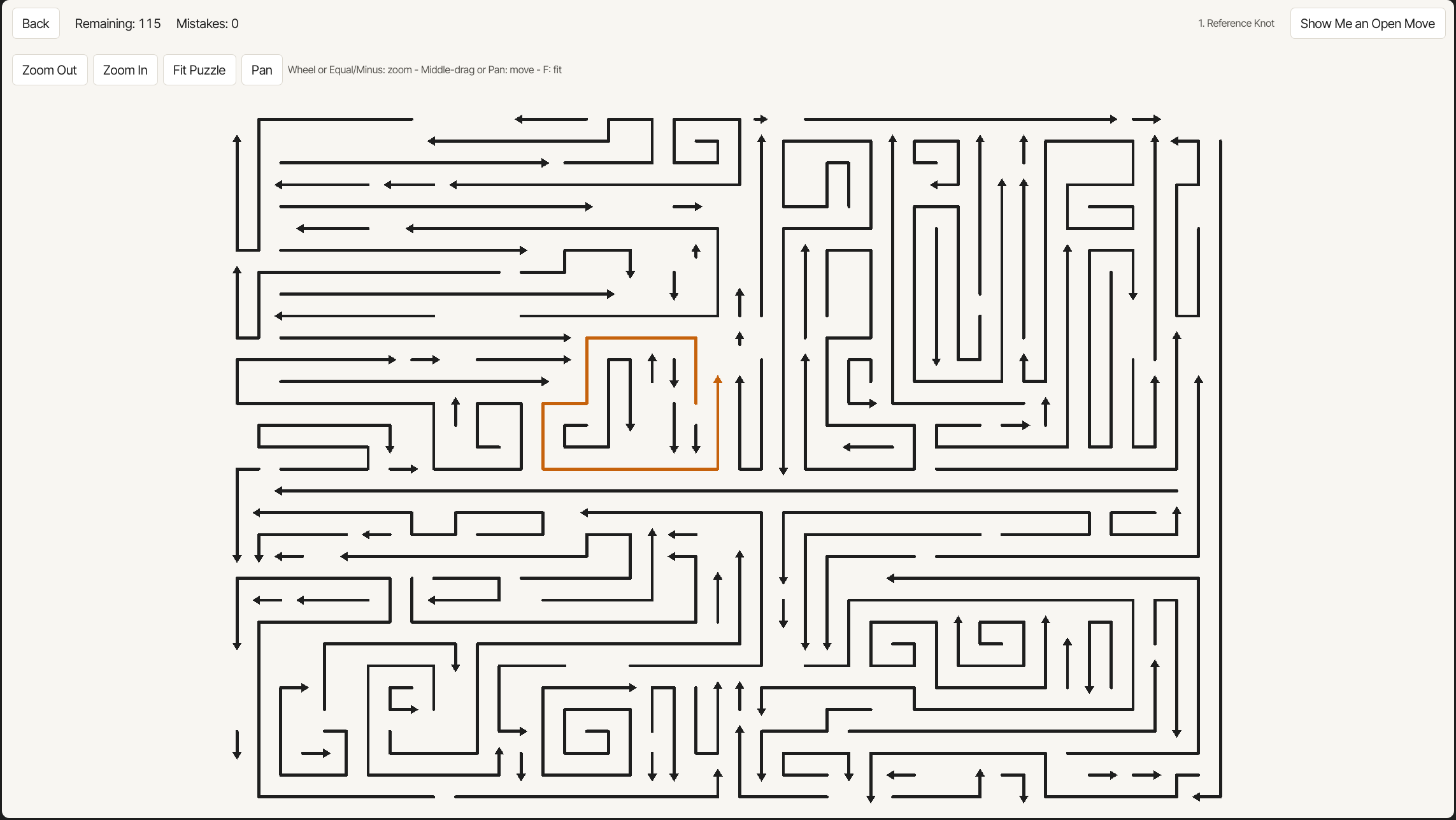
An ad-free arrow puzzle game with no lives and no waiting. Every puzzle is checked so it can be hard but never unsolvable.

Frogsfolly.com Main
Frogsfolly.com is the original website I created in 1999 when learning web technologies.
WebSpark.ArtSpark
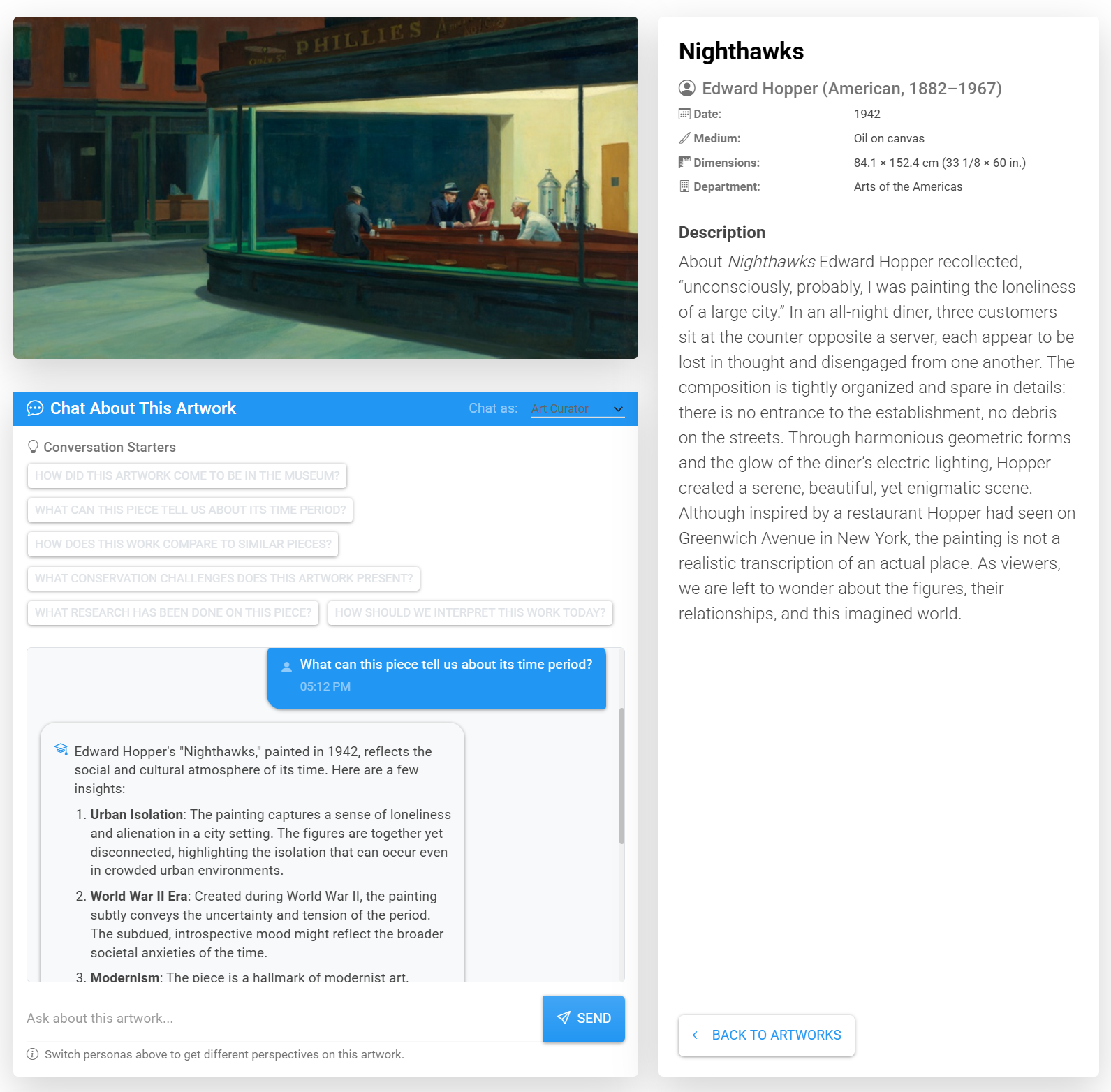
WebSpark.ArtSpark is a .NET 10 solution providing a complete client library for all 33 Art Institute of Chicago API endpoints plus an AI chat system with four personas (Artwork, Artist, Curator, Historian) powered by Semantic Kernel and GPT-4o Vision. Includes demo web app, console app, and user collections via ASP.NET Core Identity.
Working through something similar?
If this maps to something you're working on, I'm glad to compare notes. Start with the system and the constraint that matters most.