Confident Humility: Earning and Keeping Client Trust
Early in my career, a senior consultant told me something couldn't be done when he meant he didn't know how. That moment shaped what I call confident humility: saying plainly what I know and don't, never giving a client absolutes, owning mistakes without inviting abuse, and judging how much confidence and humility each moment needs.
Leadership Philosophy Series — 17 articles
- The Power of Lifelong Learning
- AI and Critical Thinking in Software Development
- Sidetracked by Sizzle: Staying Focused on True Value
- The Managed Transition Model: Leadership Promotion as Power Exchange
- When the Pressure is On - Late Sprint Hotfix Governance
- Accountability and Authority: Walking the Tightrope
- Turtling: When a Team Stops Looking for the Door
- Every Arm Is Still Searching: The Octopus Model of Agency
- The Dependencies I Never Upgraded
- The Beaver Builds a Pond
- The Shark Stops Evolving When It's Done
- The Engineering Zoo: When the Dashboard Gets Better but the Zoo Does Not
- Tactical Excellence, Strategic Truth: Who Checks Whom
- A Journeyman's Guide to Three-Week Sprints
- Momentum Is Not Propulsion
- The Last Generation of Masters?
- Confident Humility: Earning and Keeping Client Trust
Filed under Leadership and systems thinking
Topic cluster
Project Leadership and DeliveryProject Mechanics, leadership judgment, delivery accountability, and team operating models.
"It Can't Be Done"
Early in my career, I was working with a senior developer consultant who told me, with complete confidence, that something I wanted to accomplish couldn't be done. The trouble was that I knew how to do it.
My reply was something along these lines: "It can't be done" and "I don't know how to do it" are two very different statements, and you need to be honest about which one you're making.
My boss told me later that I had been mean. Maybe I was a little blunt; I've been known to be. But I wasn't trying to embarrass him. I was drawing a distinction that mattered, especially coming from someone presenting himself as a senior technical expert.
He might have had a perfectly good reason not to do what I was proposing. It might have added needless complexity, created a maintenance burden, or broken an architectural principle I hadn't considered. Any of those would have been a valuable argument, and I would have welcomed the conversation. He said it couldn't be done instead, and because I knew it could, I started questioning his technical judgment. Nobody knows everything, so the gap in his knowledge wasn't the problem. What cost him was presenting the limits of his knowledge as the limits of what was possible.
That moment stayed with me, and over the years it shaped a professional philosophy I've come to call confident humility.
Confidence Without Omniscience
I've spent decades in software development, solutions architecture, and consulting, and the clearest thing that experience has taught me is how much I still don't know. Technology changes, business problems change, and what worked beautifully five years ago can be the wrong answer today.
Experience gives you something else, though: confidence in your ability to figure things out. I don't need every answer when I walk into a meeting. I need to understand the problem, recognize where my knowledge ends, and trust myself to investigate, learn, and come back with a sound recommendation. Confidence in what you already know and confidence in your ability to solve a problem are very different things, and the second is the one that lasts.
That distinction lets me say any of three things without hesitation:
- "I know how to do that."
- "I don't know how to do that."
- "I know how to do that, but I don't think we should."
Each is a legitimate professional answer, and each tells the client something different. Trouble starts when they get confused, which is exactly what happened with the senior consultant. He gave the first answer's certainty to what was really the second.
"I Don't Know, but I'll Find Out"
One of the most useful sentences I can say to a client is "I don't know, but I'll find out." I've used it throughout my career, and it's liberating. I don't have to bluff or invent an answer, and I don't have to spend fifteen minutes defending something I'm not sure about. I acknowledge the gap and commit to closing it.
The catch is that the sentence has two halves, and the second one carries the weight. Without follow-through, "I'll find out" becomes one more empty promise. The value is in what happens afterward: I investigate, ask people who know more than I do, test my assumptions, and then I come back. Sometimes I return with an answer, sometimes with a recommendation, and sometimes with the honest conclusion that the question is more complicated than anyone expected. What matters is that I close the loop.
Over time, the client learns something from that pattern. When I say I know something, they can generally believe me. When I don't know, I'll tell them. When I promise to follow up, I do. A brilliant presentation or a perfectly worded response doesn't build trust nearly as well as that kind of plain, repeated reliability.
Never Give Absolutes
Yes, I see the irony: "never give absolutes" is itself an absolute. I keep the contradiction on purpose, because it helps me remember the principle.
When a recommendation touches a business decision, I try not to present it as if the client has no choice, because the client always has one. They can choose a different approach, accept more risk, or change the scope, budget, or timeline. They can decide the opportunity justifies something I wouldn't personally recommend. And ultimately, they can choose a different consultant.
That's the danger of presenting professional judgment as a fait accompli. Telling a client "this is the only way we can do it" looks like it removes their options, but it actually adds one: replacing you as their advisor.
As I see the job of a solutions architect, it's to explain what's technically feasible, identify the risks, present reasonable alternatives, and make a recommendation. I should be confident enough to say, "This is what I recommend, and here's why," and humble enough to recognize that the client understands parts of their business I may not. I don't own their business, I don't set their investment priorities, and I don't get to make their risk decisions for them. My responsibility is to help them make informed ones.
There are real boundaries. Security, legal obligations, safety, and professional ethics limit what I can responsibly support, and even then my job is to explain those limits honestly rather than hide behind them. The goal was never to win every argument. It's to remain someone whose judgment the client values, even on the days they choose a different direction.
Falling on My Sword
For years I described another part of this philosophy as falling on my sword. When I made a mistake, I owned it, without excuses, without explaining how someone else contributed, and without careful language designed to shift the focus. "I was wrong. That's my mistake." Then the conversation could turn to what needed to happen next.
I recently came across one of those professional-communication graphics suggesting that instead of "My mistake," you should say "Thanks for catching that." I couldn't disagree more. If I made the mistake, I need to own it. "Thanks for catching that" may be a sincere expression of appreciation, but it isn't accountability, and I don't believe acknowledging a mistake costs me credibility. Trying to dodge responsibility certainly can.
Over time, though, I learned something the graphic doesn't account for either: clients don't all respond to accountability the same way. Some genuinely appreciate the honesty and want to know what happened, how it will be corrected, and what changes going forward. Some read an admission of error as weakness. And some, frankly, want their pound of flesh.
When the Client Wants Their Pound of Flesh
I've worked with clients who weren't ready to talk about corrective action until someone had clearly accepted responsibility. They were frustrated. They may have been embarrassed in front of their own leadership, or made commitments based on information I'd given them that were now in jeopardy. They wanted accountability, and sometimes more than that.
Occasionally, a little deliberate sword-falling was exactly what the relationship needed. I could acknowledge the mistake, accept the criticism, let the client express their frustration, and then turn to the conversation that mattered: what changes so this doesn't happen again. That never meant surrendering my professional judgment or accepting blame for something I hadn't done. It meant recognizing that the client had to get past the sting of the mistake before they could engage with fixing it. Sometimes the most productive thing I could do was stop defending myself.
Taken too far, that approach does real damage. Do it too often and you establish a pattern where every problem becomes your fault. Do it with the wrong client and they may read your willingness to take responsibility as permission to exploit the relationship. The same behavior that builds trust with one client can undermine your position with another, which doesn't mean abandoning the principle. It means adapting how you practice it.
Confidence and Humility Aren't Fifty-Fifty
This is what makes confident humility hard. The mix is never even; each moment calls for its own measure of confidence and humility, and judging that measure is the skill.
| Situation | What the client needs to hear | Sounds like |
|---|---|---|
| A production outage | Confidence | "I understand the problem. Here's the recovery plan, and I'll keep you informed as I work through it." |
| A client who believes they were misled | Humility | "I made a commitment that wasn't met. That's on me." |
| A push for a technically questionable solution | A firm recommendation | "That approach can be done, but I strongly recommend against it. Let me walk through the risks and the alternatives." |
| A client looking for someone to blame | A measured acknowledgment | Enough ownership to get the conversation moving, without setting a precedent that every future problem is mine |
There's no universal script. I have to understand the relationship, recognize what's at stake, and decide when to stand my ground and when to let something go, usually while the conversation is still happening and sometimes with only a few seconds to choose. The principle stays constant; applying it takes judgment.
Getting the balance wrong can seriously damage a relationship. Too much confidence comes across as arrogance, inflexibility, or dishonesty. Too much humility raises doubts about your competence, or invites someone to take advantage of you. Confident humility, as I practice it, is the judgment to tell those situations apart.
The Hole Someone Else Will Have to Fill
It's also one of the hardest professional skills I've tried to teach. After enough years of consulting, I have an almost physical reaction when I watch someone get it wrong.
Picture a junior developer confidently promising a client that a feature will be done by Friday. The work hasn't been estimated properly, there are unresolved dependencies, and nobody has discussed what gets sacrificed to hit that date, but the promise is made. Or picture the opposite: a developer gets a perfectly reasonable technical question and answers with so much uncertainty, apology, and qualification that the client starts wondering whether the team knows what it's doing. Either way, I can watch the hole getting deeper with every sentence, and I know who will probably have to climb in and help fill it.
That isn't necessarily the junior developer's fault. They may be talented, well-intentioned, and genuinely trying to help. They haven't yet developed the judgment that comes from years of client relationships, and that judgment is extraordinarily difficult to teach. I can tell someone what to say, explain why a response missed, coach them through scenarios, and let them watch more experienced consultants work. None of that teaches them how to respond in the moment, because that takes pattern recognition, business context, reading people, anticipating consequences, and an appreciation for the trust already invested in the relationship. It's the difference between learning how to do something and understanding why.
That connects to a broader concern I have about how the next generation of software professionals develops. AI tools can dramatically speed up how quickly someone produces a technical solution, but generating code doesn't build the judgment needed to represent that solution responsibly to a client. That judgment still comes from experience, mentoring, feedback, and real consequences, and mistakes in client relationships can cost far more than mistakes in code.
Trust Is Easy to Damage and Hard to Repair
Trust builds slowly, through hundreds of interactions: successful deliveries, difficult conversations, honest recommendations, commitments made and kept. Each one adds to the client's confidence that you understand their business and can be relied on. Then one careless statement puts all of it at risk. It might be a confidently wrong assertion, an unrealistic promise, an attempt to hide a mistake, or a moment when you seem more interested in defending yourself than in solving their problem. Suddenly the client starts questioning things they used to take for granted.
The damage doesn't always stop with the person who made the mistake. On a consulting or delivery team, you're drawing on credibility other people worked hard to build, and your credibility isn't always yours alone to spend. That's a large part of why I take this seriously when I mentor developers. A bad implementation can usually be corrected: code gets refactored, tests get added, systems get repaired. A damaged client relationship is different. Even after the original problem is fixed, you don't get to decide when the client trusts you again.
Burying the Hatchet
"We Bury the Hatchet," from Garth Brooks' Ropin' the Wind, is a song about a couple who keep digging up old fights, and its chorus has the line I've always loved: "We bury the hatchet, but leave the handle stickin' out." It's funny because it's true.
You can acknowledge a mistake, accept responsibility, make things right, and agree to move forward, and the client can sincerely accept your apology. That doesn't mean they've forgotten. The next time something goes wrong, someone may remember exactly where that hatchet is buried. I've seen an issue everyone agreed was resolved resurface in an unrelated disagreement. Sometimes that's understandable, because trust hasn't fully recovered. Sometimes it's a sign that a client keeps past mistakes as leverage.
Either way, resolving a problem, being forgiven, and having trust restored are three separate things, and they rarely arrive together. The uncomfortable part is that I control only my share of that process. I can be honest, accept responsibility, fix the problem, and keep delivering on my commitments. I can't make someone trust me again. That takes time, sometimes a very long time.
A Practice, Not a Personality Trait
Confident humility doesn't mean being soft-spoken, agreeable, or reluctant to challenge people. It can take considerable confidence to tell a client they're making a mistake, and considerable humility to accept that, despite my technical expertise, they may have legitimate reasons to decide differently. It takes some courage to say "I don't know," and sometimes the hardest words in the room are "I was wrong."
None of those statements means much without what follows them: following through, taking responsibility, respecting the client's choices, and paying attention to how my words land on the relationship. I don't claim to get the balance right every time. Experience doesn't make anyone infallible; if anything, it gives you a longer list of times you got something wrong and had to live with the consequences. What it does provide is a clearer sense of what's at stake.
Early in my career, I thought of falling on my sword as a way of accepting responsibility. Now I think more broadly about the trust I'm responsible for protecting: my own credibility, my team's, and the client's confidence that my advice is honest, informed, and grounded in their interests. That doesn't mean telling clients what they want to hear. It means telling them what I believe they need to know, being clear about what I don't know, respecting their authority to make the final business decision, and owning it when I'm wrong. I don't do that because it guarantees forgiveness or earns admiration. I do it because it's the right way to practice the profession.
Back to the Consultant
I still think about that senior consultant. I don't remember every technical detail of the disagreement, but decades later I remember how quickly his credibility changed in my eyes, and it had nothing to do with a missing piece of technical knowledge. He presented uncertainty as certainty.
Had he said, "I don't know how to do that," the two of us might have learned something. Had he said, "I know it can be done, but here's why I don't recommend it," we might have had a useful architectural discussion. He made an absolute statement I knew was wrong instead, and the relationship changed.
Trust takes years to build and seconds to damage, and the moment it's most at risk is usually the moment before I answer a question I'm not sure about. The useful question then is rarely whether I sound confident. It's whether what I'm about to say is something I know, something I don't, or something I'd rather not do, and whether I'm willing to stand behind it afterward.
Explore More
- The Last Generation of Masters? — why AI speeds up how to build software but doesn't teach the judgment junior developers need
- Accountability and Authority: Walking the Tightrope — what happens when the person accountable for a decision isn't the one who made it
- The Art of Making Yourself Replaceable — what consulting taught me about building things that outlast my involvement
- Building a Quick Estimation Template — a way to answer "when will it be done?" before promising Friday
Related project evidence
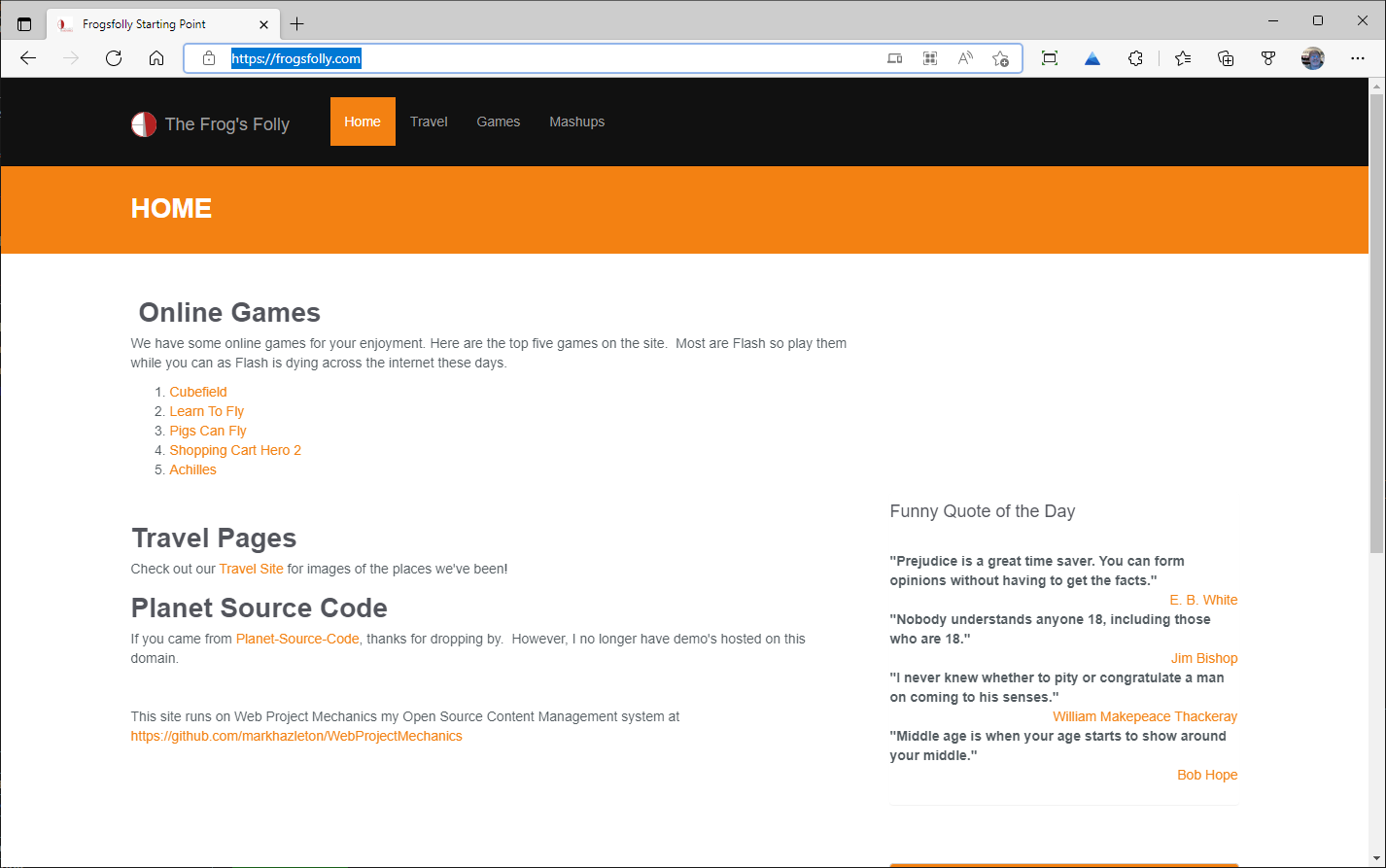
Frogsfolly.com Main
Frogsfolly.com is the original website I created in 1999 when learning web technologies.

SupportSpark: Compassionate Support Network Platform
SupportSpark is a privacy-focused web application designed to help individuals maintain supportive networks during challenging life moments. Built with React 19, Express 5, and TypeScript, it provides a calm, structured platform for sharing personal journey updates with threaded conversations.
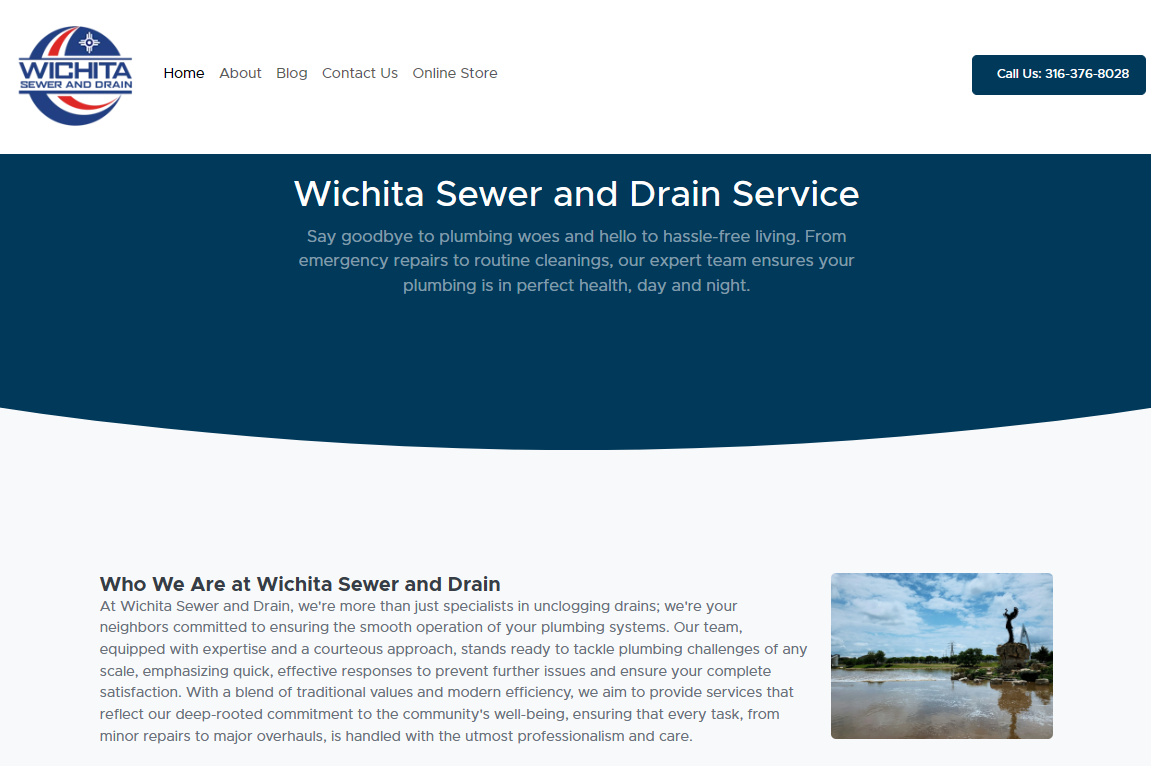
WichitaSewer.com
The website for Wichita Sewer and Drain Service, a new local business, built so customers could find it and call from day one.
Live since 2024 and still maintained
Working through something similar?
If this maps to something you're working on, I'm glad to compare notes. Start with the system and the constraint that matters most.