Building ArtSpark: Where AI Meets Art History
Discover how ArtSpark combines AI and art history, allowing users to interact with artworks through a platform built with .NET 9, Microsoft Semantic Kernel, and GPT-4 Vision. This article explores the creation, challenges, and future developments of ArtSpark.
Case Studies Series — 10 articles
- Mastering Web Project Mechanics
- From Concept to Live: Unveiling WichitaSewer.com
- Fixing a Runaway Node.js Recursive Folder Issue
- The Creation of ShareSmallBiz.com: A Platform for Small Business Success
- From README to Reality: Teaching an Agent to Bootstrap a UI Theme
- Building ArtSpark: Where AI Meets Art History
- Building TeachSpark: AI-Powered Educational Technology for Teachers
- Safely Launching a New MarkHazleton.com
- SupportSpark: A Lightweight Support Network Without the Noise
- Cloudflare and IIS: Hosting My .NET Sites on One VM
Filed under Pragmatic architecture and modernization
Topic cluster
Case Studies and Project EvidenceProject writeups, Spark ecosystem applications, content workflows, and lessons from shipped systems.
Deep Dive: WebSpark.ArtSpark
Creating an AI-Powered Platform for Conversational Art Experiences
When I discovered the Art Institute of Chicago's public API, I envisioned something revolutionary: What if museum visitors could have actual conversations with the artworks themselves? This question became the spark for ArtSpark—a project exploring the intersection of AI, cultural preservation, and interactive education.
Experience ArtSpark Yourself
Ready to have conversations with famous artworks? Try ArtSpark and discover how AI brings art history to life.
ArtSpark Demo: AI Conversations with Art
Watch ArtSpark in action as AI personas bring museum artworks to life through interactive conversations.
Museums have always faced a fundamental challenge: how do you make ancient artifacts relevant and engaging to modern audiences? Traditional museum labels provide facts, but they don't capture the emotional resonance or cultural depth that makes these objects truly meaningful.
"What if visitors could have actual conversations with the artworks themselves? Not just read about a West African mask, but chat with it about its ceremonial significance, its journey to the museum, or how it feels about being displayed thousands of miles from home."
The Vision: Making Art Accessible Through Conversation
I envisioned something different from traditional museum experiences. The concept was ambitious: create AI personas that could embody not just the artwork itself, but also the artist who created it, the curator who studies it, and the historian who contextualizes it.
Interactive Conversations
Direct dialogue with artworks, artists, curators, and historians through AI personas that provide unique perspectives on cultural treasures.
Cultural Bridge
p.card-text AI that translates complex artistic and historical concepts into accessible, engaging conversations across cultures and time periods.
Technical Foundation: Building on Solid Ground
The API Discovery
The Art Institute of Chicago's API is a developer's dream. It provides comprehensive data on over 120,000 artworks, including detailed metadata, high-resolution images via IIIF (International Image Interoperability Framework), and rich descriptive content.
{
  "id": 111628,
  "title": "Helmet Mask (Ndoli Jowei)",
  "artist_display": "Attributed to Mustafa Ado Dassama",
  "place_of_origin": "Sierra Leone",
  "date_display": "First half of the 20th century",
  "medium_display": "Wood, metal, and pigment",
  "description": "This helmet mask represents the water spirit..."
}
Choosing the Right Tech Stack
Core Application
- .NET 9 and MVC
- Familiar, robust structure
- Focus on innovation over framework learning
AI Orchestration
- Microsoft Semantic Kernel
- Robust conversation management
- Plugin architecture for extensibility
The GPT-4 Vision Breakthrough
Initially, my AI agents could only work with text metadata. Then OpenAI released GPT-4 Vision, and everything changed. Suddenly, my AI personas could analyze the actual visual elements of artworks:
Example Conversation
User:
"What colors do you see in yourself?"
Helmet Mask:
"Looking at myself, I can see my deep brown wooden base with vibrant red ochre around my mouth area, white kaolin clay highlighting my eyes, and black charcoal creating the linear patterns across my forehead. These aren't just decorative choices—each color carries spiritual meaning in Mende culture..."
The Four Personas: Multiple Perspectives on Art
The heart of ArtSpark lies in its four distinct AI personas, each offering a unique conversational experience:
1. The Artwork Persona
The most innovative aspect—the artwork speaks in first person:
"I am a Helmet Mask, carved in early 20th century Sierra Leone. I was created for sacred Sande society ceremonies, and I carry the spiritual essence of the water spirit Ndoli Jowei. I remember the hands that carved me, the ceremonies where I danced, and the long journey that brought me to this museum..."
2. The Artist Persona
When known, the artist's voice brings technical and cultural expertise:
"I am Mustafa Ado Dassama, and I carved this mask using traditional Mende techniques passed down through generations. The geometric patterns you see aren't random—each line represents spiritual concepts that connect the physical and spiritual worlds..."
3. The Curator Persona
The museum professional perspective provides scholarly context:
"As a curator specializing in West African art, I can tell you this mask represents one of the finest examples of Sande society craftsmanship in our collection. The provenance traces back to early 20th century Sierra Leone..."
4. The Historian Persona
The broadest perspective, connecting artworks to their historical moment:
"When this mask was created in early 20th century Sierra Leone, the region was experiencing significant cultural changes due to colonial influence. Yet this piece demonstrates the resilience of traditional spiritual practices..."
Technical Implementation: The Magic Behind the Scenes
Smart Vision Integration
Not every conversation needs visual analysis, so I implemented intelligent detection:
private bool IsVisualAnalysisRequest(string message)
{
  var visualKeywords = new[]
  {
    "see", "look", "color", "shape", "pattern", "design",
    "visual", "appearance", "texture", "describe"
  };

  return visualKeywords.Any(keyword =>
    message.Contains(keyword, StringComparison.OrdinalIgnoreCase));
}
When users ask about visual elements, the system automatically includes the artwork image in the AI prompt. For general questions, it relies on metadata to keep costs manageable.
Memory and Context Management
Conversations feel natural because the system maintains context across multiple exchanges:
public class ChatRequest
{
  public int ArtworkId { get; set; }
  public string Message { get; set; }
  public ChatPersona Persona { get; set; }
  public List<ChatMessage> ConversationHistory { get; set; }
  public bool IncludeVisualAnalysis { get; set; }
}
Challenges and Solutions
Cultural Sensitivity
- Respectful representation of sacred objects
- Educational focus over entertainment
- Clear AI interpretation transparency
Performance Optimization
- Smart image inclusion for visual analysis
- Conversation caching to minimize API calls
- Response streaming for user engagement
Scalability Architecture
The library design ensures the system can grow:
// Easy to swap data providers
services.AddArtSparkAgent<CustomDataProvider>(configuration);

// Pluggable memory systems
services.AddArtSparkAgentWithMemory<RedisMemory>(configuration);

// Configurable AI models
config.OpenAI.ModelId = "gpt-4o"; // or any compatible model
The User Experience: Where Technology Meets Wonder
The final interface feels magical precisely because the technology fades into the background. Users see a familiar chat interface, but behind it lies sophisticated AI orchestration.
Typical Interaction Flow
User:
"Hello! What should I know about you?"
Helmet Mask:
"Greetings! I am a Helmet Mask from Sierra Leone, created for the sacred Sande society ceremonies. I represent Ndoli Jowei, a water spirit who embodies beauty, fertility, and wisdom. Would you like to know about the intricate patterns carved into my surface, or perhaps the spiritual significance of my role in coming-of-age ceremonies?"
Lessons Learned and Future Directions
What Worked Well
-
Persona-based approach provides rich understanding
-
Vision integration transforms conversation quality
-
Cultural sensitivity builds trust and value
-
Modular architecture enables extension and reuse
Future Enhancements
Near-term Goals
- Multi-language support
- Audio integration with voice conversations
- Collaborative filtering features
Long-term Vision
- Augmented reality museum integration
- Community conversation sharing
- Multi-institution expansion
Open Source and Community
True to my commitment to knowledge sharing, the core concepts and architecture patterns are documented and shareable. The WebSpark.ArtSpark.Agent library demonstrates patterns that could be applied to any cultural institution with digital collections.
Historical Societies
Enable conversations with historical figures
Science Museums
Let exhibits explain complex concepts
Libraries
Make rare books and manuscripts interactive
Technical Details for Fellow Developers
Technology Stack
- Frontend: .NET 9 MVC with responsive JavaScript
- AI Framework: Microsoft Semantic Kernel
- Data Source: Art Institute of Chicago API
- Architecture: Clean separation with DI
Key Features
- Performance: Intelligent caching and optimization
- Security: API key protection and rate limiting
- Extensibility: Swappable components and providers
- Monitoring: Comprehensive logging and metrics
Conclusion: Where Art Meets AI
ArtSpark represents more than a technical achievement—it's a new way of experiencing cultural heritage. By giving artworks their own voices, we transform passive observation into active dialogue.
The project showcases the potential of AI to serve as a cultural bridge, translating complex artistic and historical concepts into accessible, engaging conversations. It demonstrates that when we combine technical sophistication with cultural sensitivity, we can create experiences that honor both innovation and tradition.
As AI continues to evolve, projects like ArtSpark point toward a future where technology doesn't distance us from our cultural heritage—it brings us closer to it.
Project Statistics
- 4 AI Personas (Artwork, Artist, Curator, Historian)
- 120,000+ Available Artworks
- Multi-turn Conversation Support
- Visual Analysis Capabilities
Technology Highlights
- .NET 9 / C# 12
- Microsoft Semantic Kernel
- OpenAI GPT-4 Vision API
- IIIF Image Standards
- Cultural Sensitivity Framework
Explore More
- Mastering Web Project Mechanics -- Explore essential strategies for web project success
- Exploring Microsoft Copilot Studio -- Discover the Future of AI with Mark Hazleton
- From Concept to Live: Unveiling WichitaSewer.com -- Exploring the Development Journey of WichitaSewer.com
- Taking FastEndpoints for a Test Drive -- Exploring the streamlined approach to building ASP.NET APIs
- Fixing a Runaway Node.js Recursive Folder Issue -- Addressing Infinite Recursive Directory Creation in Node.js
Related project evidence
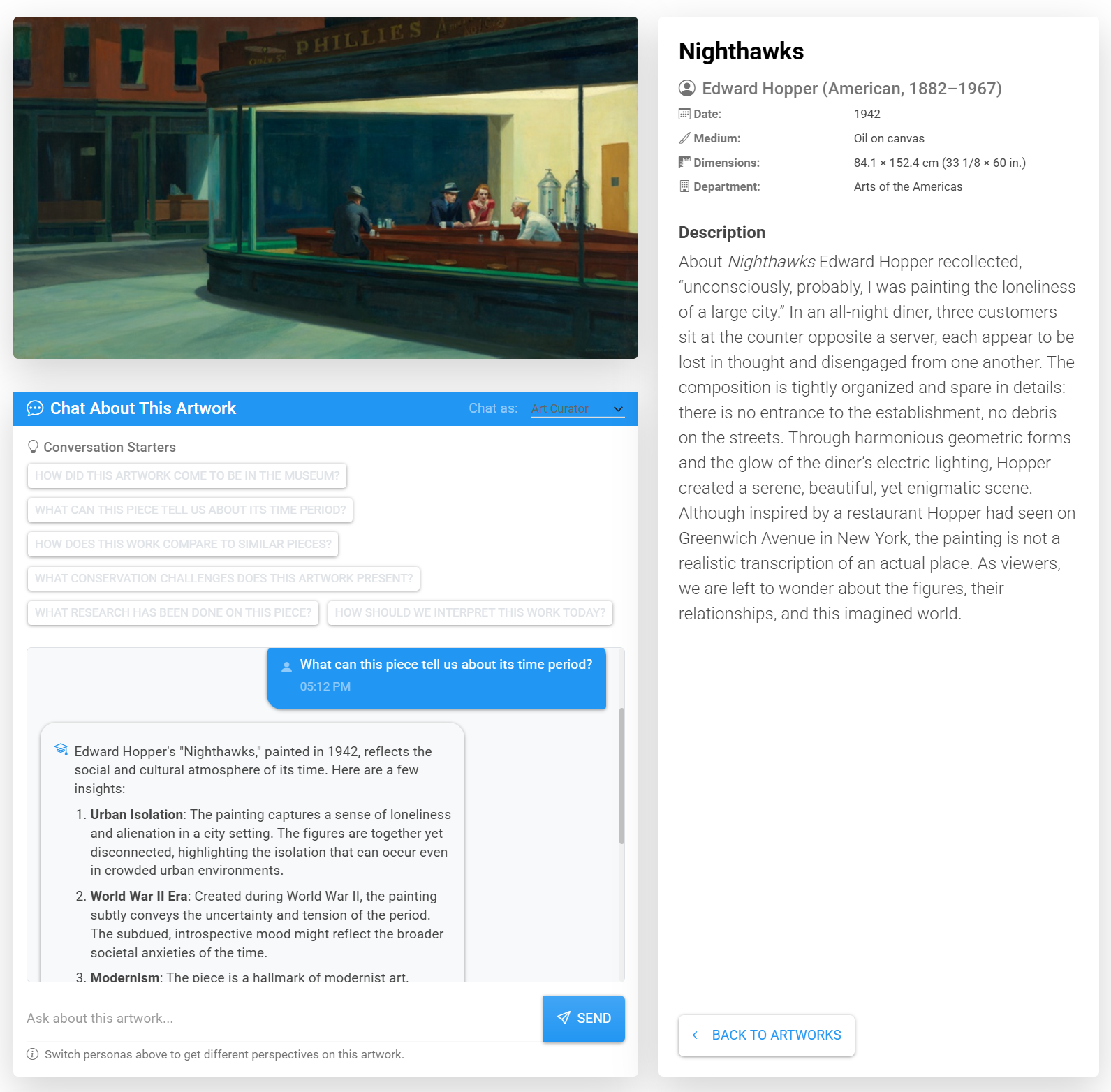
WebSpark.ArtSpark
WebSpark.ArtSpark is a .NET 10 solution providing a complete client library for all 33 Art Institute of Chicago API endpoints plus an AI chat system with four personas (Artwork, Artist, Curator, Historian) powered by Semantic Kernel and GPT-4o Vision. Includes demo web app, console app, and user collections via ASP.NET Core Identity.
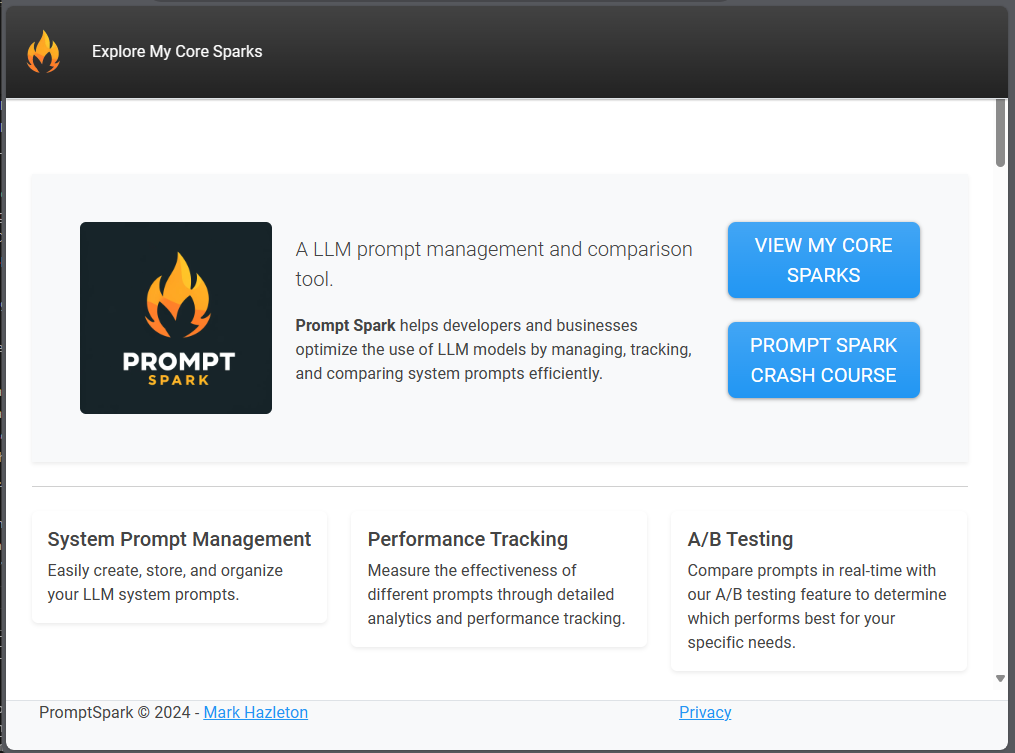
PromptSpark
PromptSpark.Chat is a real-time, workflow-driven chat application built with ASP.NET Core, SignalR, and Adaptive Cards. Users interact with branching multi-step workflows through conversational UI, with optional AI-driven responses via IChatCompletionService.

WebSpark
Comprehensive .NET ASP.NET Core MVC suite of seven modular applications — PromptSpark, RecipeSpark, TriviaSpark, WebCMS, AsyncSpark, Admin, and Identity — demonstrating modern enterprise web architecture with AI integration.
Working through something similar?
If this maps to something you're working on, I'm glad to compare notes. Start with the system and the constraint that matters most.