The Methodology Tax: Why Grassroots Innovation Gets Rejected
Enterprises often reject the AI development tools best equipped to solve their governance problems, not because the tools fail technically but because of how they arrive. Using DevSpark as a case study, I trace why this happens and what it would take to fix it.

DevSpark Series — 33 articles
- Taking DevSpark to the Next Level
- From Oracle CASE to Spec-Driven AI Development
- Fork Management: Automating Upstream Integration
- Why I Built DevSpark
- Getting Started with DevSpark: Requirements Quality Matters
- DevSpark: Constitution-Based Pull Request Reviews
- DevSpark: The Evolution of AI-Assisted Software Development
- DevSpark: Months Later, Lessons Learned
- DevSpark in Practice: A NuGet Package Case Study
- DevSpark: From Fork to Framework — What the Commits Reveal
- DevSpark v0.1.0: Agent-Agnostic, Multi-User, and Built for Teams
- DevSpark Monorepo Support: Governing Multiple Apps in One Repository
- Bring Your Own AI: DevSpark Unlocks Multi-Agent Collaboration
- Dogfooding DevSpark: Building the Plane While Flying It
- DevSpark: Constitution-Driven AI for Software Development
- The DevSpark Tiered Prompt Model: Resolving Context at Scale
- Workflows as First-Class Artifacts: Defining Operations for AI
- Closing the Loop: Automating Feedback with Suggest-Improvement
- Observability in AI Workflows: Exposing the Black Box
- Autonomy Guardrails: Bounding Agent Action Safely
- Designing the DevSpark CLI UX: Commands vs Prompts
- A Governed Contribution Model for DevSpark Prompts
- The Alias Layer: Masking Complexity in Agent Invocations
- Prompt Metadata: Enforcing the DevSpark Constitution
- DevSpark Blogging Workflow: How I Built Better Articles
- DevSpark and Agent Skills: Beyond Portable AI Capabilities
- The Methodology Tax: Why Grassroots Innovation Gets Rejected
- DevSpark's Next Evolution: Rethinking Where Knowledge Lives
- DevSpark v4: The Spec Was Never the Record
- DevSpark: Change Must Start With a Real Need
- I'm Not a Game Developer. I Built a Game Anyway.
- QA Was Always My Last Battle Front
- DevSpark Dogfooding: Escaping the Scope-Creep Spiral
Filed under Building software with AI
Topic cluster
DevSpark and Spec-Driven DeliverySpec-driven development, AI-assisted delivery workflows, governance, and the DevSpark toolkit.
The Pattern Is Predictable
I've watched the same scene play out more than once. A team identifies a problem, builds or adopts a solution, proves it works, and shares it. Then something shifts — often something as small as a folder of markdown prompt files showing up in a repository where no one was expecting them. A leader who wasn't involved asks a question. A peer who wasn't consulted raises a concern. The concern gets forwarded up the chain, a meeting gets called, and by the time everyone is in the room, the original problem — the one the tool was built to solve — is no longer on the agenda. What's on the agenda is process. Who approved this? Why weren't we consulted? What are the risks?
The team, now defending instead of delivering, makes a predictable mistake: they try to answer governance questions on the fly, in a meeting they weren't prepared for, in front of stakeholders who haven't seen the work. They look disorganized. The tool looks risky. The concern calcifies into policy. The tool gets pulled, the team goes back to doing things the slow way, and the original problem stays unsolved.
I call this the methodology tax — the cost an organization pays when its instinct to control innovation outruns its discipline to evaluate it. It shows up as lost productivity, as demoralized engineers, and as the slow accumulation of technical debt that comes from doing things the hard way because the smart way wasn't invented here.
Why the Reflex Fires Before the Facts Do
The reflex to reject unfamiliar methodology isn't irrational. It comes from real scar tissue — shadow IT, untested dependencies checked in without review, architectural decisions made by one team that became years of maintenance debt for everyone else. The instinct to ask questions before accepting new tooling is sound. I'd want that instinct in any organization I was responsible for.
The problem is when the instinct fires before anyone gathers facts. When a snap assessment replaces technical evaluation. When the question "what is this, actually?" never gets asked, because asking would mean slowing down long enough to find out.
What I've seen happen in practice: a stakeholder notices something unfamiliar in a repository. They don't recognize it, so they assume risk, and they escalate. By the time anyone sits down to evaluate what the thing actually is, the political machinery is already running and the conclusion has already been reached. That's not governance. That's pattern matching standing in for evaluation.
The Specific Failure Mode of AI Methodology
AI-assisted development is hitting this same wall, but harder, because the tooling is genuinely unfamiliar to a lot of enterprise leadership. The vocabulary is new. The artifacts look different. The workflow doesn't map cleanly onto what a traditional SDLC produces.
When a leader who isn't current on AI development practices opens a repository and finds a folder of markdown prompt files and slash commands, the instinct is to reach for the nearest familiar frame. This must be a dependency. This must be a governance risk. This is something legal should look at. The fact that none of that is true — that a prompt template is a text file, no more dangerous than a README — doesn't matter in the moment. The unfamiliar has already been coded as risk, and recoding it after the fact is much harder than getting the first read right.
This is the specific tax AI methodology work pays. It isn't just fighting inertia. It's fighting misclassification, and misclassification is stubborn because it shapes the frame everything else gets evaluated through.
The Double Standard Nobody Names
Here's the asymmetry the rejection pattern depends on. A six-figure platform purchase — selected by a vendor evaluation committee, rolled out across a few thousand seats, carrying real questions about data residency, vendor lock-in, and ongoing license cost — gets a kickoff meeting, an executive sponsor, and a rollout plan. Nobody in the room asks "who approved this?" because someone with the authority to approve it already did, long before the first engineer saw a login screen.
A team that wrote forty markdown files gets none of that benefit. Same legal team, same security reviewers, same governance apparatus — but for the grassroots tool, that apparatus shows up after the fact and treats the team like an incident, while for the mandated platform it treated the decision as already settled.
The difference isn't risk. Measured strictly by exposure, the grassroots tool is usually the safer of the two — no contract, no data leaving the building, no new attack surface. What decides the outcome is whether the initiative arrived with authority already attached. Mandated change inherits legitimacy from the person who ordered it. Grassroots change has to manufacture legitimacy after the fact, defending itself in a room it didn't choose to be in.
That's the part of the methodology tax that never shows up on a risk register: the apparatus built to manage risk is actually keyed to manage authority, and it will wave through the riskier thing every time, as long as the right person said yes first.
Adoption Is a Stronger Signal Than Approval
There's a flip side to the double standard that's easy to miss. Grassroots tools that survive long enough to get noticed have already cleared a bar mandated tools never face: voluntary, repeated, unsupervised use. Nobody required the team to keep opening those markdown files. They kept reaching for them because the files solved the problem, every day, with no one watching and nothing to gain from pretending. By the time a leader notices the tool, the adoption has already happened.
A mandated platform carries the opposite problem. It was selected, funded, and rolled out before a single engineer touched it, so its only proof of success is a deployment count, not a usage pattern. I've seen the gap between those two numbers up close — a tool with full license utilization and a fraction of that in actual workflow integration, where people open it to clear a compliance dashboard and then do the real work somewhere else. That's grassroots rejection too. It just doesn't escalate, because nobody calls a meeting about a tool they've simply stopped using.
The same instinct that can't distinguish unfamiliar from risky in a grassroots tool also can't distinguish adoption from compliance in a mandated one. A rollout with full attendance and zero enthusiasm looks identical on a status report to one that's actually working. The only way to tell them apart is to ask the people doing the work — which is exactly the step the political machinery skips in both directions. It skips evaluation on the way in for grassroots tools, and skips it on the way through for mandated ones.
What Building DevSpark Taught Me
DevSpark — the Adaptive System Life Cycle Development toolkit I built — is a useful case study here, because I designed it specifically to sidestep the governance objections that tend to kill enterprise tooling adoption: no vendor lock-in, no cost or contract, no dependency to audit, no workflow disruption for anyone who opts out. I built it, in other words, to answer every reasonable enterprise objection before the objection could be raised.
And I've still watched the rejection pattern play out around it — not because the concerns were reasonable, but because they were raised before anyone asked what the thing actually was. Grassroots tools don't get the benefit of the doubt that mandated ones do.
The lesson I took from that isn't that better design prevents rejection. It's that enterprise rejection of methodology is rarely a technical problem first. It's a political and organizational one, and design alone doesn't resolve it.
Three Conditions I've Come to Trust
Watching this pattern repeat across organizations, I've landed on three conditions that seem to determine whether a new development methodology survives its introduction.
Sponsorship Before the Work Begins
Not after the first pull request lands — before. The team needs a named leader who has already agreed the approach is worth evaluating, someone who can absorb the first wave of political pressure without immediately escalating it. Without that sponsor in place, the first unfamiliar artifact anyone notices in a repository becomes an incident instead of a conversation.
Documentation Aimed at the Audience That Will Reject It
Engineers can read a README; they already understand what a markdown file is. The audience that rejects a methodology isn't reading the README — they're reading whatever lands on their desk after someone else has already framed it as a problem. That audience needs a one-page answer to the exact question their legal or security team will ask, and that document has to exist before the question is asked, not assembled in a panic afterward.
Separating the Methodology From the Person Who Built It
When a methodology gets tied too closely to a single advocate, attacking the methodology becomes a way of attacking the person, and the conversation stops being about the work. The strongest enterprise methodologies get presented as shared infrastructure — team contributions, institutional knowledge — even when, in practice, one person built the whole thing.
The Governance Irony
Here's the detail that gets lost every time this plays out: the tools most likely to get rejected are usually the tools most explicitly designed to solve the governance problem the organization claims to care about.
DevSpark ships with a constitution — a governed document every AI prompt reads and enforces automatically — plus commands that review every pull request against it, audit a codebase for violations, and challenge implementation decisions before they reach the repository. It is, in plain terms, an AI governance framework, rejected in some rooms in the name of governance.
The organizations that reject tools like this end up recreating the exact governance gap they were trying to prevent, because the people doing the evaluating weren't asking what the tool was. They were asking who approved it — the same question the mandated platform never has to answer, because someone already did, in advance.
What I'd Try Instead
None of this strikes me as inevitable. It's a leadership problem, which means it has a leadership-shaped fix.
I'd want a fast track for evaluating internal innovation — a lightweight review, measured in days rather than weeks, that produces a factual technical read before the political machinery has a chance to engage. A sharper line between methodology and dependency would help too. A markdown file is not a dependency, a prompt template is not a dependency, and when a governance reflex fires on things that aren't dependencies, it spends governance capacity on false positives — and quietly teaches teams to hide their methodology choices instead of sharing them.
I'd also want adoption tracked separately from deployment — voluntary, repeated use, not license counts or attendance logs — because it's the only metric that doesn't quietly lie about whether a tool, mandated or grassroots, is actually solving the problem it was bought or built to solve.
I'd want the engineers who build methodology — spec frameworks, governance automation, development tooling — recognized alongside the ones who ship features, because in my experience they're often the highest-leverage people on a team. An incentive structure that only sees feature delivery will get feature delivery and nothing else, while the methodology debt compounds quietly until it can't be ignored anymore.
Organizations also need to take their own AI governance gap seriously as something that's growing, not theoretical. Every team using AI-assisted development is accumulating undocumented decisions, untracked AI contributions, and ungoverned prompt patterns whether anyone's watching or not. The teams solving that — through constitution-driven development, spec-driven workflows, adversarial review automation — are building something durable. The teams rejecting those same solutions in the name of governance are falling further behind while believing they're being careful.
The Cost of Getting This Wrong
The methodology tax compounds. A team that has its tooling rejected once thinks twice before introducing the next improvement. Then it thinks three times. Then it stops trying.
The engineers who build methodology — the ones thinking about how code should be written, not just writing it — are exactly the people an organization can't afford to lose. In my experience, they don't leave because of what they built. They leave because of how it arrived, and they leave quietly, taking years of context with them.
The irony I keep coming back to is that the organizations most resistant to methodology innovation are usually the ones that need it most — the largest governance gaps, the most inconsistent practices, the highest rates of AI-generated defects nobody's tracking. They end up spending the most on a problem their own engineers already solved, well after those engineers are gone.
Where This Leaves Me
DevSpark is one example of a methodology built from the ground up to comply with every legitimate enterprise concern about AI-assisted development. None of that guarantees it survives first contact with an organization that hasn't built the evaluation muscle to look past the unfamiliar — or the habit of asking the same hard question of mandated initiatives that it asks of grassroots ones.
I don't think the point is whether any particular tool gets adopted. I think the point is whether an organization has a way to ask "what is this, actually?" before the political machinery answers the question for everyone — and whether it asks that question of the things leadership already blessed, not just the things that showed up uninvited. The methodology tax gets paid either way. The only choice is whether it gets paid for evaluation or for avoidance.
Explore More
- Why I Built DevSpark — the brownfield reality that made constitution-driven AI development feel necessary rather than optional
- Every Arm Is Still Searching: The Octopus Model of Agency — how the Methodology Tax is what it looks like when an organization loses track of its own shared objective
- When the Pressure Is On: Late-Sprint Hotfix Governance — how governance reflexes behave under deadline pressure, in code review instead of methodology adoption
- Accountability and Authority: Walking the Tightrope — the broader leadership dynamic of who gets to decide, and who answers for the decision
- DevSpark v0.1.0: Agent-Agnostic, Multi-User, and Built for Teams — the design choices behind DevSpark's no-lock-in stance referenced here
- Prompt Metadata: Enforcing the DevSpark Constitution — how the constitution this article describes actually gets enforced at the prompt level
Related project evidence

DevSpark: Constitutional AI Governance Framework
DevSpark is a standalone AI-assisted development framework that extends Specification-Driven Development with constitution-based PR reviews, codebase-wide compliance auditing, adversarial risk analysis, brownfield constitution discovery, and adaptive lifecycle management. DevSpark makes project constitutions valuable throughout the entire development lifecycle — from greenfield planning through continuous constitutional governance.
Used across most of my active repositories, including this site
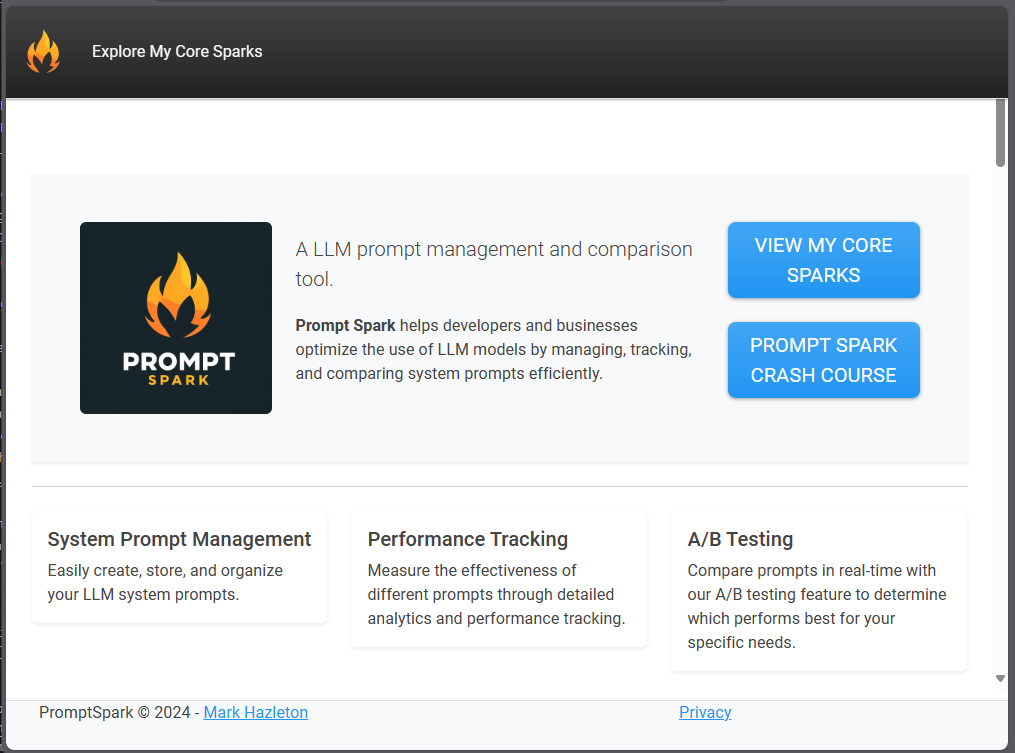
PromptSpark
PromptSpark.Chat is a real-time, workflow-driven chat application built with ASP.NET Core, SignalR, and Adaptive Cards. Users interact with branching multi-step workflows through conversational UI, with optional AI-driven responses via IChatCompletionService.

DocSpecSpark
Documentation-driven specification system for turning architectural intent into implementation context.
Working through something similar?
If this maps to something you're working on, I'm glad to compare notes. Start with the system and the constraint that matters most.