Data Science for .NET Developers
Formal AI/ML study did not replace my .NET experience. It gave me a different way to reason about uncertain problems and collaborate with data teams.

Part of the Python and Data Science for .NET Developers series
Phase Foundations, Part 1
Data Science Series — 6 articles
Filed under Pragmatic architecture and modernization
Topic cluster
Python and Data SciencePython, data analysis, visualization, and machine learning foundations from a .NET developer's perspective.
Data Science for .NET Developers
When I decided to enroll in UT Austin's AI/ML program through Great Learning, I wasn't sure what to expect. I'd spent years working in .NET, building enterprise systems, web applications, and APIs — the kind of structured, typed world where the requirements were usually clear and the output was a running application. Data science felt like a different discipline entirely, with a different language (Python), different tools (Jupyter notebooks, Pandas, scikit-learn), and a different way of thinking about problems.
What I found was that the gap between software development and data science is smaller than it looks from the outside — and that the skills transfer in both directions.
Why Formal Study Was Worth the Commitment
The decision to pursue formal training in data science wasn't obvious. There are countless online courses, tutorials, and certifications available. What drew me to the UT Austin program specifically was the structured curriculum that connected machine learning concepts to practical implementation, with enough rigor to go beyond surface-level familiarity.
For me, the program offered a way to build genuine competency rather than talking-point familiarity with AI/ML. The commitment also forced continuity. I could not abandon a difficult statistics concept after one frustrating evening and move to the next interesting tutorial.
From Writing Rules to Testing Patterns
The curriculum covered machine learning algorithms, data analysis, visualization techniques, and Python — but the more lasting effect was less about specific tools and more about developing a different mode of thinking. In traditional software development, you write rules. In machine learning, you write systems that infer rules from data.
That shift changed how I approached problems. When I encounter a classification or pattern-detection task in .NET work now, I have a mental model for how a data-driven approach might complement a rules-based one. I also have a better sense of when the available data is too weak, biased, or poorly defined to support that move.
The useful lesson was not “replace business rules with machine learning.” It was to recognize that some problems contain stable rules while others contain patterns that should be measured and tested. Knowing which kind of problem I am facing changes the architecture before a model or service is selected.
What Came Back Into My .NET Work
The most practical effect has been in how I think about data. Understanding what EDA reveals about a dataset, knowing when clustering might surface meaningful structure, having some fluency with Python — these aren't skills that replace .NET expertise. They extend it.
Data science also gave me a better vocabulary for working with data engineering and ML teams. Concepts such as feature leakage, class imbalance, drift, and confidence thresholds now translate into architectural questions: Which data is available at prediction time? How will we monitor behavior after deployment? What happens when the model is uncertain?
Those questions matter even when another team owns the model. A production ML feature still needs authentication, observability, versioning, fallbacks, and a clear contract with the application consuming it. My .NET background remained relevant; the AI/ML work made the boundary around the model more visible.
Curiosity Was a Better Reason Than Fear
The framing of "stay competitive or fall behind" is a bit worn out, and it undersells the actual reason to invest in this. Data science is interesting. The problems are genuinely hard, the tools are powerful, and the field is still evolving rapidly. That combination makes it worth exploring — not because you have to, but because it opens up problems worth working on.
The program did not turn me from a .NET architect into a data scientist, and that was never the goal. It gave me enough depth to recognize the shape of a data problem, ask better questions of specialists, and understand where an experiment ends and an operational system begins.
That boundary is increasingly where architecture work happens. Models do not arrive in production by themselves. They become one component in a system of data contracts, services, people, and decisions. Learning the data-science side made me better prepared to design the rest of that system.
The UT Austin AI/ML Learning Series
The articles below grew directly out of the UT Austin program. Together they follow the same path I did, from adapting to Python's workflow through exploring a real dataset and testing whether clustering revealed useful structure:
-
You are here — Data Science for .NET Developers: Why a developer rooted in .NET pursued a formal AI/ML program and what changed as a result.
-
Python: The Language of Data Science: Why Python became the lingua franca of data science, and what the transition looks like from a C# perspective.
-
When the First Visualization Answers the Wrong Question: A practical example of how a polished chart can hide the customers the analysis was meant to find.
-
Exploratory Data Analysis with Python: A deeper dive into EDA using a real nutritional dataset from Kaggle — sanity checks, univariate analysis, bivariate analysis, and the Python code that runs it.
-
Exploring Nutritional Data with K-means Clustering: The next step after EDA — applying unsupervised machine learning to the same dataset to discover food groupings by nutrient profile.
-
Understanding Neural Networks: The foundational architecture behind modern AI — how networks learn from data and why the training data matters more than the model design.
-
Computer Vision in Machine Learning: How machine learning interprets visual data — applications across healthcare, automotive, and retail, and the challenges that make production CV systems hard.
-
Harnessing NLP: Concepts and Real-World Impact: A comprehensive look at Natural Language Processing — from tokenization and sentiment analysis to the transformer revolution and GPT-4.
Explore More
- Python: The Language of Data Science -- Understanding Python's Impact on Data Science
- Exploring Nutritional Data Using K-means Clustering -- Unveiling Patterns in Nutritional Data
- Exploratory Data Analysis with Python -- Master the art of data exploration and visualization with Python's power
- Understanding Neural Networks -- A Beginner's Guide to Neural Networks
- When the First Visualization Answers the Wrong Question -- Why choosing a chart is part of the analysis
Related project evidence
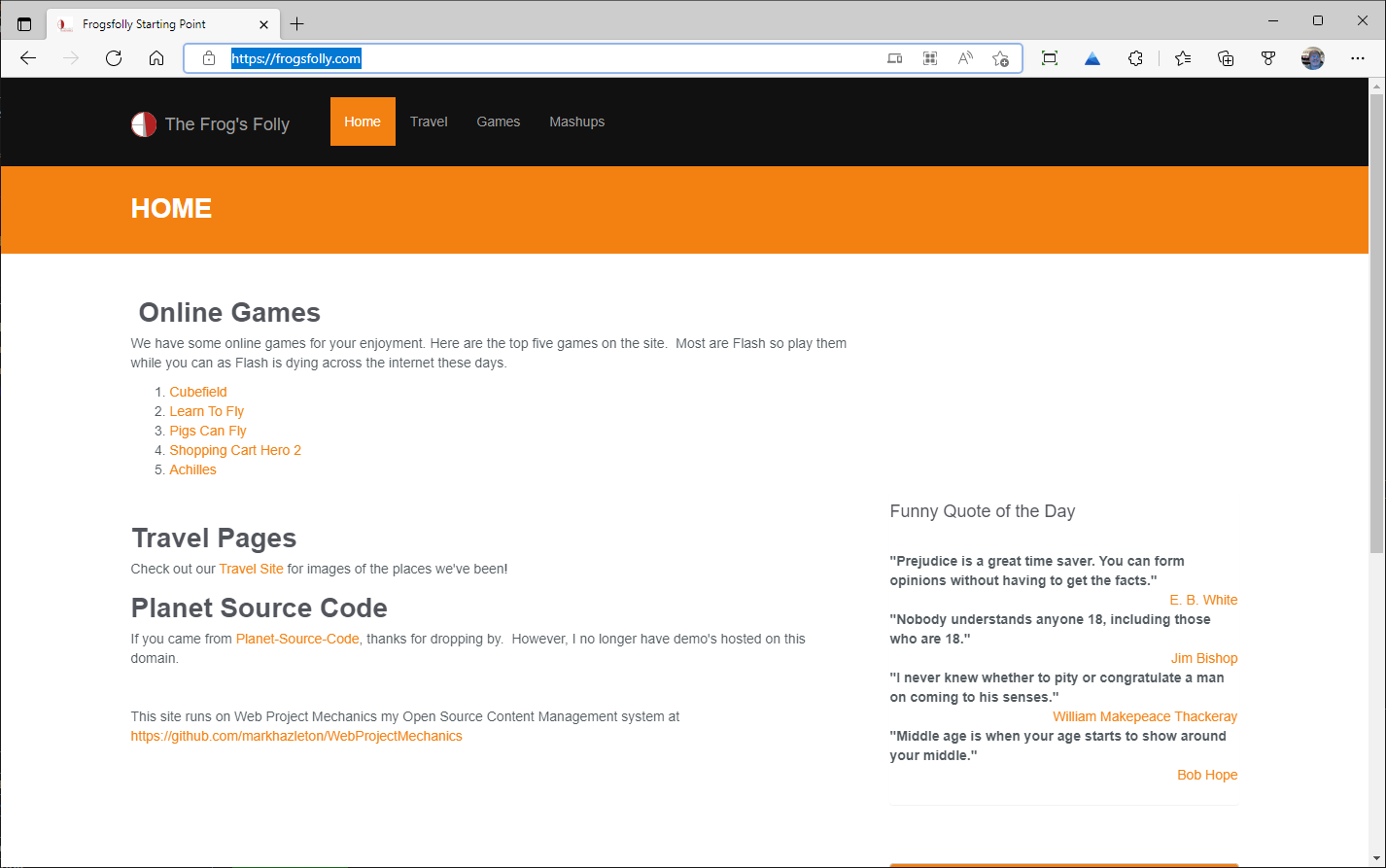
Frogsfolly.com Main
Frogsfolly.com is the original website I created in 1999 when learning web technologies.

UISampleSpark: Seven UI Paradigms, One Backend
UISampleSpark compares multiple frontend approaches — MVC, Razor Pages, jQuery AJAX, React, Vue, htmx, Blazor, and SPA — all running against the same .NET 10 REST API. Originally a simple MVC CRUD demo, it has evolved into a living reference for modern UI architecture decisions with Docker containerization and Bootswatch theming.
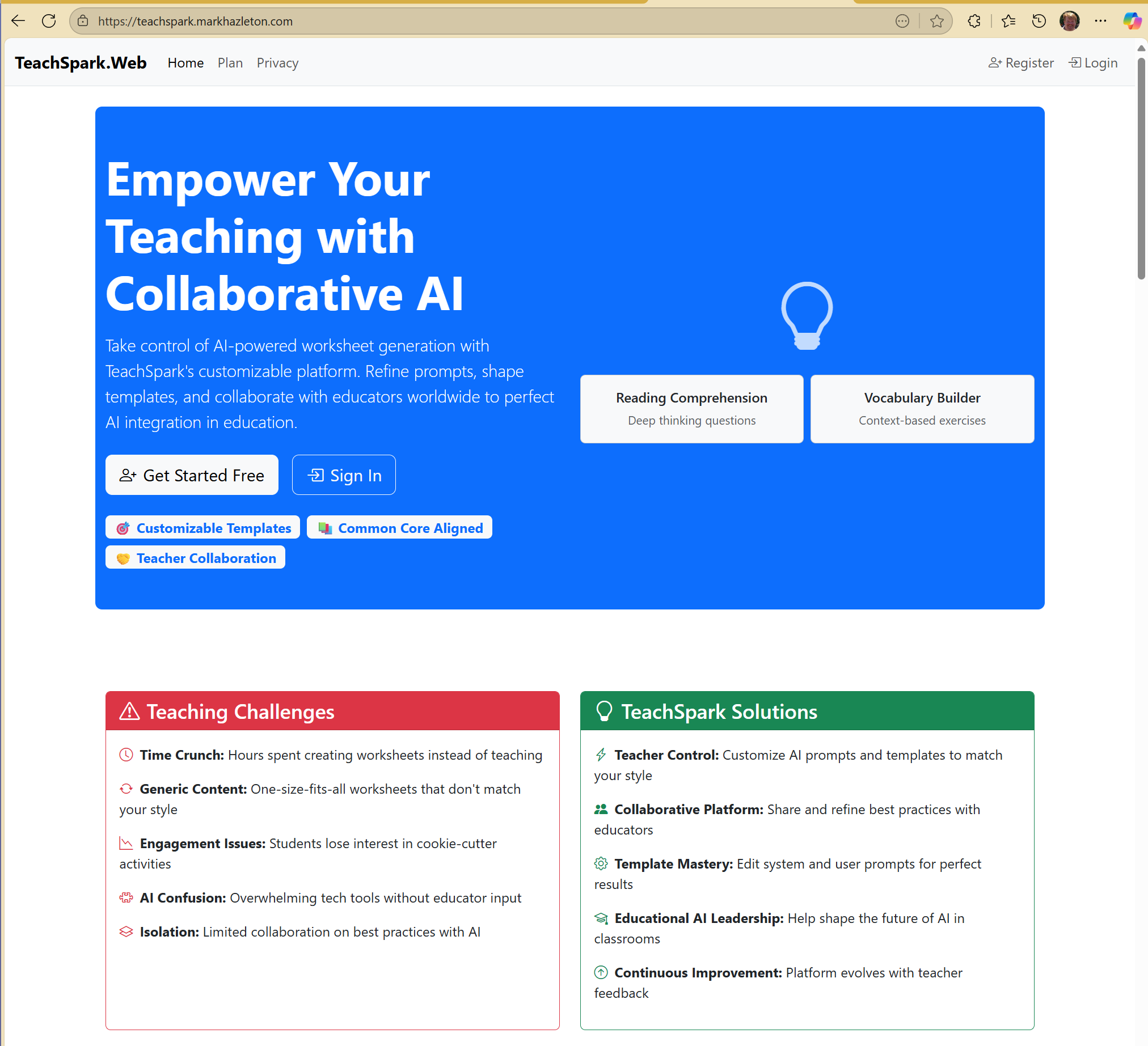
TeachSpark: AI-Driven Educational Platform
TeachSpark is an LLM-powered educational platform built with .NET 10 MVC and a Webpack 5 frontend build system. It provides adaptive learning with personalized content delivery, interactive curriculum with real-time feedback, progress analytics, and comprehensive code quality tooling (ESLint, Prettier, Husky).
Working through something similar?
If this maps to something you're working on, I'm glad to compare notes. Start with the system and the constraint that matters most.